How we built a full-stack web platform for a California-based low-voltage electrical company — bridging their offline legacy software with a modern online system, cutting technician wait times, and bringing their entire operation into one place.
CHALLENGE
The Problem We Solved
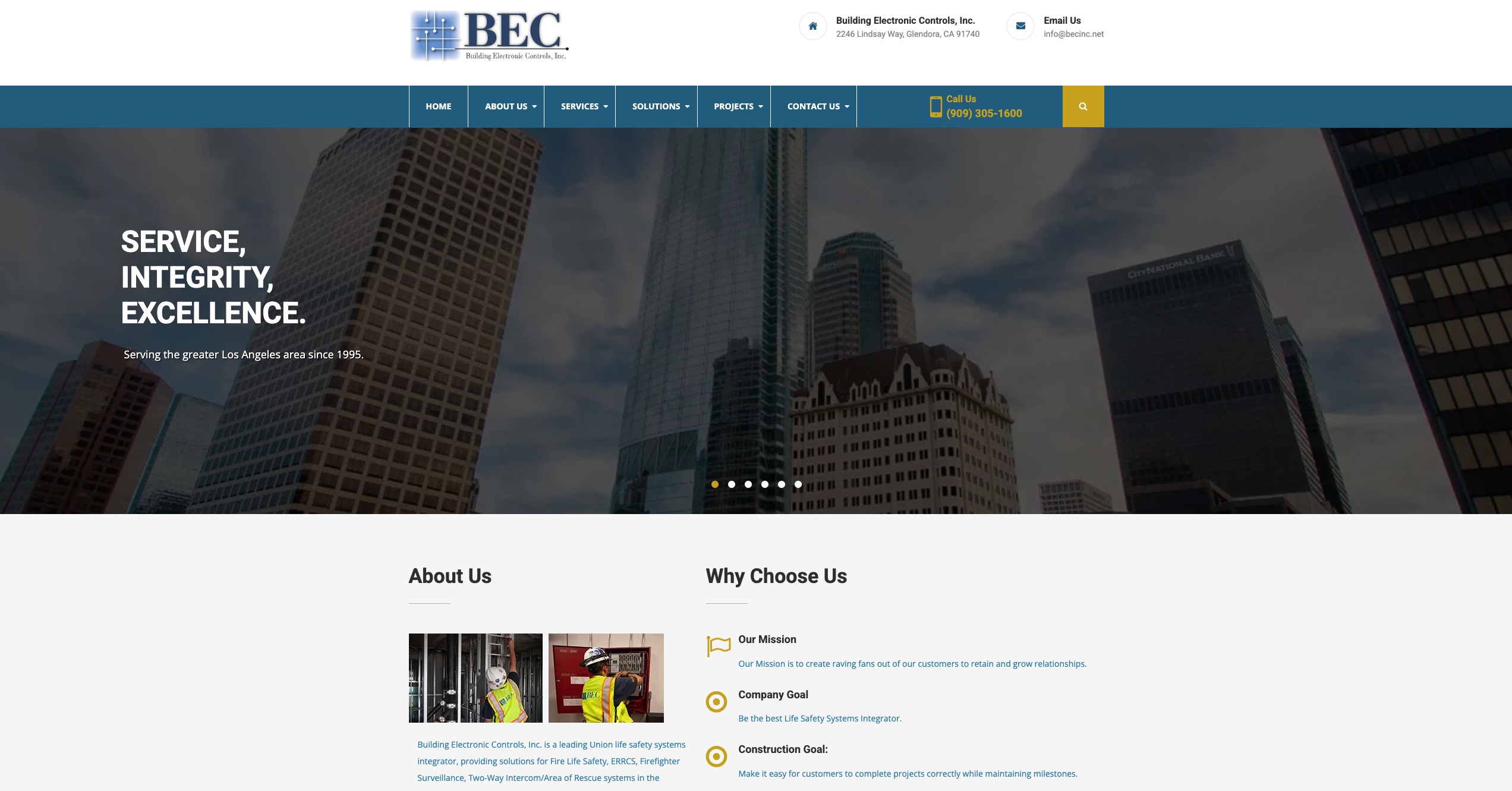
BEC Incorporated — Building Electronics Incorporated — is an established company based in Glendora, California. They specialize in maintenance of low-voltage electrical equipment, including fire alarms and similar systems. Their technicians go out to sites, inspect and service equipment, and manage everything from change requests to stock replacements. For years, BEC ran their entire business on a software called Computerise — a solid, reliable system that handled their accounting, business management, and operations. There was just one problem: Computerise runs on a local network. It cannot go online. And as BEC’s team of field technicians grew, that limitation started costing them real time and real money.
CORE CHALLENGES BOX:
Computerise could not go online, meaning technicians had zero direct access to data in the field; call center was overwhelmed handling manual lookups and relaying information over phone; stock across multiple warehouses had no real-time tracking system; no structured way for teams to collaborate on project planning and AutoCAD design files — everything was being emailed back and forth; no training module existed for onboarding technicians to the system.
Here’s what a typical day looked like before we stepped in. A technician would be out at a site, find a faulty piece of equipment, and then call the call center to explain the issue and provide the serial number. The call center would manually look up the maintenance records in Computerise, check the terms, and then relay everything back to the technician over the phone. If a change request or replacement needed to be raised, the same back-and-forth would happen again. With multiple technicians in the field simultaneously, the call center was constantly overwhelmed, and something that should take an hour was routinely taking four to five hours.
SOLUTION
Our Approach: A Secure Bridge Between Legacy and Modern
The core of our solution was a physical Node.js server placed at BEC’s office in Glendora. This server acts as a secure gateway between the local Computerise network and our Laravel-based web application. When a technician in the field needs to look something up, they send a request through the web app on their iPad. That request goes to the Node.js gateway, which securely fetches the relevant data from the local database, encrypts it, and sends it back to Laravel — which then displays it to the technician. Clean, secure, and fast. Beyond the core connectivity, we built out four major modules that BEC needed to run their business properly:
Architecture Layers:
- Web Application (Laravel + MySQL): The main platform used by technicians, call center staff, and management. Connected to the local Computerise database via the Node.js gateway.
- Node.js Gateway Server (On-Premise, Glendora): A physical server placed at BEC’s office. Acts as the secure bridge between the Laravel system and the local Computerise network.
- Stock Management Module: Tracks inventory across multiple warehouses in real time — including stock transfers between locations and live tracking of which stock is currently in transit on which truck.
- Project Management & Collaboration Module: A closed environment where designers, technicians, planners, and project managers can collaborate on projects, share AutoCAD planning files, leave reviews, and track progress — without a single email chain.
- Training Module: An internal learning module built within the CRM to train new technicians and employees on system usage.
- Infrastructure: Hosted on AWS. Neuvo WebTech manages all DevOps and ongoing maintenance.
The challenge here wasn’t just building a web application — it was building one that could talk to a system that was never designed to go online. We worked with our client Chris Ames at BEC to design a solution that respects their existing investment in Computerise while giving the field team the real-time access they needed.

KEY TECHNICAL DECISIONS
- On-Premise Node.js Gateway — Don’t Replace, Bridge: We placed a physical Node.js server at BEC’s Glendora office as a secure gateway between Computerise and our Laravel web app. Technicians get the data they need on their iPads in seconds — and Computerise keeps running exactly as before.
- Encryption on Every Data Transfer: Every request between the Node.js gateway and Laravel is encrypted end-to-end. Sensitive maintenance records and client data never travel unprotected — security was non-negotiable on this one.
- Multi-Level Stock Tracking — Warehouse, Transfer, and Truck: We built three tracking states — in warehouse, in transfer, and on truck — giving BEC full visibility of every stock item at every point in its journey, not just what’s sitting on a shelf.
- Closed Collaboration Environment for Project Work: We replaced BEC’s entire email-based design review process with a closed project environment where designers, technicians, planners, and project managers all work in one place — files shared, reviews left, approvals tracked, no email chains.
- Training Module Inside the CRM: Onboarding is built directly into the platform so new technicians learn in the same environment where they’ll actually work — no separate documentation, no external tools.
RESULTS
Impact & Metrics
Before this system, BEC’s technicians were entirely dependent on the call center for even the most basic information lookups. A field visit that should have been resolved in an hour could drag on for half a day because of the phone-based back and forth. Since launching the platform in 2023, the entire dynamic has changed. Technicians have direct access to the data they need, the call center is no longer a bottleneck, and the business finally has visibility across its warehouses and projects in real time.


Beyond the numbers paragraph: The biggest shift was giving technicians their independence in the field. They no longer need to call the call center every time they need a maintenance record or want to raise a change request — they just open the web app on their iPad and do it themselves. On the operations side, stock across warehouses and trucks is visible in real time, which means fewer lost items and faster fulfillment. And the project management module replaced an entire mess of email threads and shared drives with one clean, closed collaboration environment where everyone — designers, technicians, planners, and project managers — can actually work together properly.
PROCESS SECTION
Implementation Timeline
Technology
TECH STACK
Backend
Frontend
DevOps
"Before this system, our technicians were completely dependent on the call center for everything. Now they have everything they need right on their iPad — maintenance records, change requests, stock levels. What used to take half a day is done in an hour. Neuvo WebTech understood our constraints and built something that actually works with our existing setup, not against it."

Team
WHO WORKED ON THIS
Team: 1 Full-stack developers (Laravel),2 Node.js backend engineer,3 DevOps engineer
QA Company: Neuvo WebTech LLP
Ongoing: Neuvo WebTech continues to handle all development, upgrades, and server infrastructure for this project. Further modules and upgrades are currently in progress.
Ready to Transform Your Business?
Let's create a custom strategy tailored to your unique challenges and opportunities
Get Started TodayRelated Case Studies